
 EN
EN  Bulgarian
 Magyar
 Polish
Joinery vices
Most Popular


Newest
Display:1-11 of 11products
Filter Brush
In woodworking or assembly activities, the stability of the part is essential to carry out precise operations. A joinery vise allows for controlled clamping of elements during drilling, gluing, adjusting or assembly, helping to maintain alignment and achieve consistent results.
The category of joinery vices available on concris.ro includes clamps and clamping systems used for temporary fastening of wooden parts or other materials during processing. These accessories are frequently used in carpentry workshops, assembly work or technical activities where stabilization of parts is required. By applying controlled pressure and maintaining the position of the parts, the vises help to increase precision during work operations.
Why does the vice influence the quality of the work?
A wood vise has the role of keeping the parts firmly fixed during the machining or assembly processes. The stability of the part reduces the risk of displacement and allows for higher precision operations. The correct use of a vice contributes to:
- stabilization of workpieces during drilling or milling;
- maintaining alignment while gluing panels or wooden elements;
- fixing components during adjustments or grinding;
- Reduction of vibrations during manual or mechanical processing.
By properly clamping the parts, machining operations can be carried out in safer conditions and with better precision.
Technical characteristics to analyze before purchase
For the correct choice of a joinery vise, it is important to evaluate some essential technical parameters. Among the main criteria are:
- maximum opening, which determines the size of the pieces that can be fixed;
- jaw depth, relevant for wider parts;
- the type of tightening mechanism – classic screw or quick-tightening system;
- bar stiffness and torsional strength;
- the quality of the thread and the clamping mechanism;
- jaw protection, useful for preventing marking of wooden surfaces.
The analysis of these characteristics allows the selection of a suitable vice for the type of work performed.
Types of joinery vises available
1. Bench vice – stability for precise operations
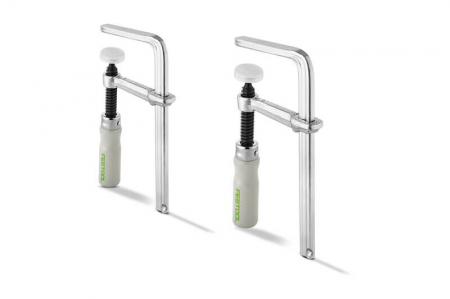
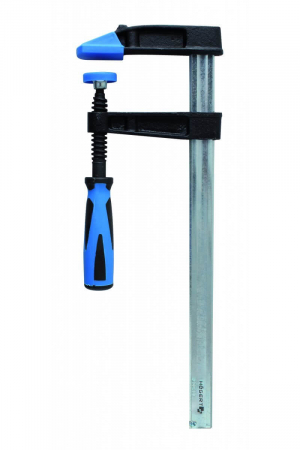
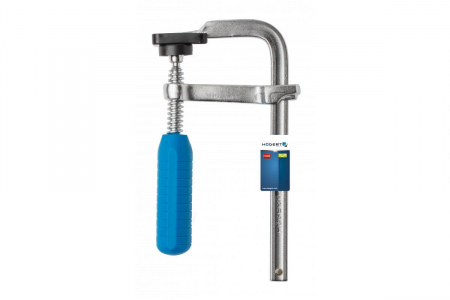
The F-type vise is one of the most widely used fastening solutions in carpentry work. Its construction includes a metal bar and an adjustable clamping mechanism, which allows for quick adjustment of the opening. This type of vice is frequently used for:
- fixing of wooden panels or elements;
- assembly of components during soldering;
- stabilization of workpieces during drilling or milling;
- temporary fixings in various technical works.
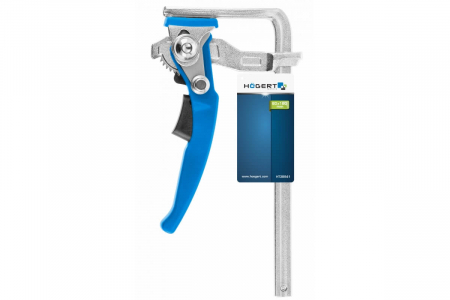
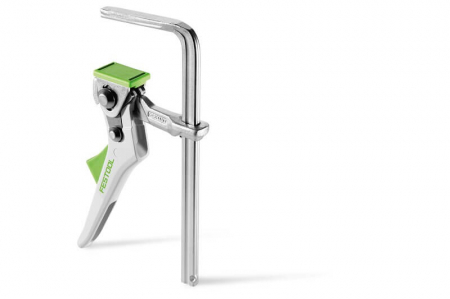
The uniform pressure distribution helps to maintain the position of the parts without deformation of the material. The 200x60 mm lever joinery vise model offers precise pressure adjustment and efficient handling in confined spaces, making it suitable for workshops that require fine tightening control.
2. Type F vise – solution for multiple soldering and fastening
The F-type vice is frequently used when assembling panels and frames, due to the long bar and quick opening adjustment. Uniform pressure distribution is important in the soldering process to avoid gaps or bending of the workpiece. A suitable example for common applications is the carpentry vise type F 160x80 mm, recommended for medium fasteners and high-frequency workshop work. Choose this type if:
- glue solid wood countertops or panels;
- fix door frames or furniture fronts;
- You need several pressing points at once.
3. Angle vise – precise 90° clamping
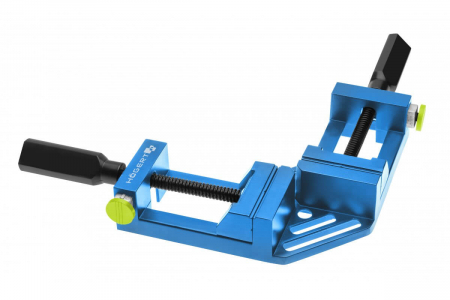
For the assembly of right-angle components, angle vises are used, which allow two parts to be fixed simultaneously in a perpendicular position. These models are used in particular for:
- assembly of frames;
- assembly of wooden structures;
- fixing components during soldering or drilling.
The metal construction provides rigidity and stability during use.
4. Angle vice and auxiliary clamps
In addition to the main vices, the fastening product category also includes auxiliary clamps, which are used for quick positioning or temporary fastening. These accessories may include:
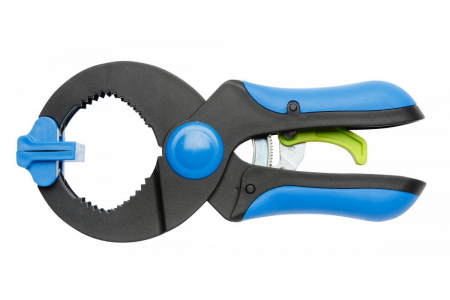
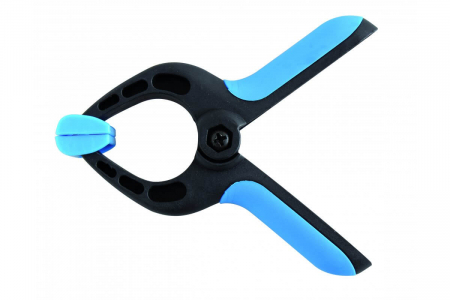
- spring clamps;
- lever clamps;
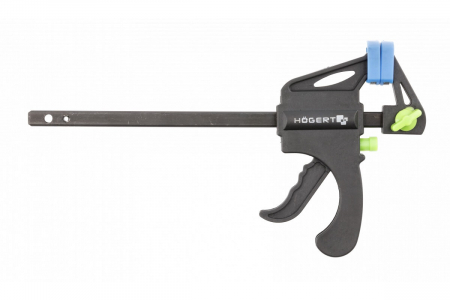
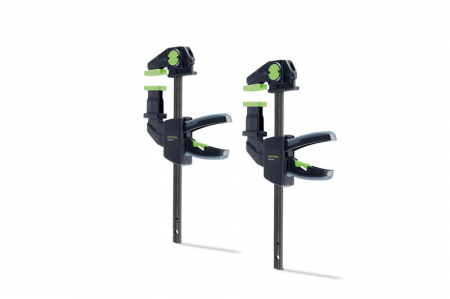
- Clamps for quick fixing.
Their use complements the main clamping systems and allows the fastening to be adapted to different types of parts.
Recommended materials and construction for intensive use
The durability of a vise depends largely on the materials used and the construction of the clamping mechanism. Models intended for frequent use usually include:
- torsion-resistant metal bars;
- robust clamping mechanisms;
- wear-resistant thread;
- jaws provided with protections to protect surfaces.
These elements help to maintain constant pressure and repeated use without deforming the mechanism.
How do you choose the right vice for your workshop?
The selection of a vise must be made according to the type of work performed and the size of the workpieces. The main criteria to analyze include:
- the size of the parts to be fastened;
- frequency of use;
- the type of clamping mechanism;
- rigidity of construction;
- the materials from which the vice is made.
For jobs involving multiple fasteners or large workpieces, it is helpful to use multiple evenly distributed vises to maintain constant pressure.
Recommended configuration for the organization of the fastening system
For an efficient workflow, it is useful to use several types of fastening systems:
- type F vises for general fastenings;
- quick-tightening vises for repetitive work;
- angle vises for 90° joints;
- auxiliary clamps for temporary positioning.
By combining these accessories, a fastening system adapted to different types of work can be created.
FAQ
What is the difference between an F-type vise and a quick-tightening vise?
The F-type vise uses a classic screw mechanism for pressure adjustment, while the quick-release vise allows the workpiece to be secured by a mechanical quick-lock system.
When is an angle vice recommended?
The angle vice is used when workpieces need to be fixed at a 90° angle, for example when assembling frames or rectangular structures.
How can I prevent wood surface marking?
Use jaw guards or plastic or wood inserts to distribute pressure evenly.
How many vises are needed to fasten a long panel?
To maintain uniform pressure, it is recommended to use several vises distributed throughout the workpiece.